jimjilbang – Korean sauna
Before my trip to Korea, I did some research. Many sources recommended visiting a jimjilbang, which in Korean culture is similar to a sauna in Finland, an onsen in Japan, a banya in Russia, or a hammam in Turkey – a cheap public bathhouse. All the local friends we met during our trip suggested the same, but of course, I thought I knew better. I wasn’t about to “waste” my precious time exploring a place I believed there was nothing special about. After all, I had experienced saunas before. No matter how much I enjoy those visits, I had other plans for my time in Seoul. My poor husband ended up accompanying me to all five royal palaces. Yes, FIVE!
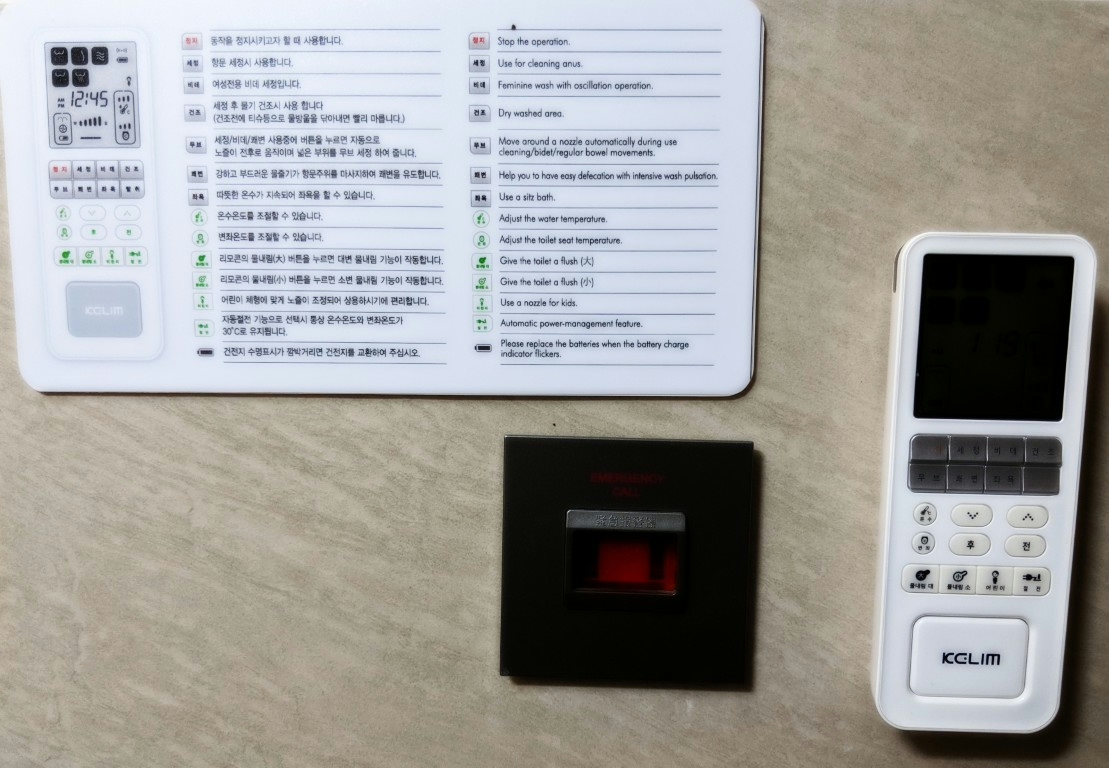
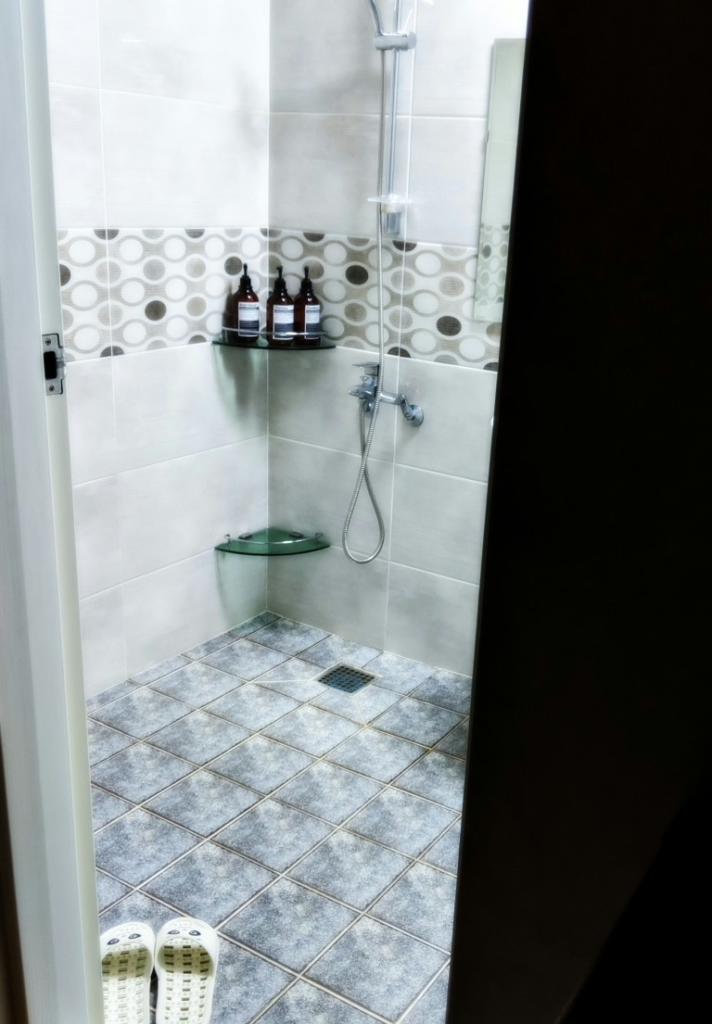
It’s worth mentioning that the majority of Korean apartments do not have large bathrooms with space for a bathtub. Typically, bathrooms are small and equipped with a shower only. Interestingly, there is no shower curtain; water splashes freely and drains quickly through a floor drain located in the center. As a result, the floor often remains wet, which makes the Korean custom of wearing wooden or plastic bathroom slippers especially practical. Since we’re discussing the bathroom situation in Korea, it’s worth mentioning that the toilets were impressively high-tech. So much so, that many of them came with a manual to explain all their features.
Thankfully, the rain began, and it was heavy, as a typhoon approached Seoul. I faced a choice: give up on visiting the place so many people had recommended or stay at the hotel. Since there was a very famous Seoul sauna only about a 15-minute walk away and it was already 2 PM on my last day, with no sign the rain would stop pouring, I decided to go. While this particular place might not be exactly like other establishments of its kind, the general rules and experience are quite similar.
Siloam Sauna is conveniently located near Seoul Station, which makes it particularly accessible for visitors. Despite the name, however, the experience is quite different from what many people might expect when they hear the word “sauna.” At first, I found it difficult to enjoy. No one seemed to speak English, and the translated signs were often unclear or confusing. That’s why I’ve decided not only to share my personal impressions, but also to describe how the place is actually meant to be used.
A quick word of advice, especially for my American readers, this experience involves nudity. In the communal, gender-segregated bathing areas, being fully naked is not optional – it’s mandatory. While most Europeans tend to be relatively comfortable with this, I know that many Americans may find it challenging. If that’s the case, you might prefer to skip the lower ground floor altogether.
That said, if you’re willing to step outside your comfort zone and give it a try, I truly believe you won’t regret it. That initial sense of vulnerability fades quickly, and the experience is absolutely worth it. After all, people come in all shapes and sizes!
As I mentioned earlier, translation can be an issue, and the check-in desk is the first place where many English speakers, including native ones, start to feel confused. Upon arrival, you’re given a choice between two entrance fees: a basic one for the bath area only, and a slightly higher one that includes something called a “fomentation.” Not exactly a word you hear every day. Since it sounded like some kind of medical treatment, we decided to go with the basic option and figure things out later, depending on what we felt like doing. As we soon discovered, in this particular establishment, “fomentation” simply refers to access to the upper floors, the non-bathing areas where clothing is required.
The first step after purchasing your ticket is to head to the appropriate section of the building, men turn directly to the left. You begin by removing your shoes, which won’t come as a surprise to anyone familiar with Korean customs. The shoes are placed in a small locker near the entrance, and from there, you head half a floor up to the main locker room. There, you’ll be given your sauna clothes, brown or orange, depending on your gender. If you plan to start with the communal areas on the upper floors, you simply change into the clothing provided. However, if you intend to use the bathing facilities first, you’ll need to head downstairs. You go stark naked or with only a very modest towel. And when I say modest, I mean it, it’s roughly the size of a Western handkerchief, so it offers virtually no coverage. One important rule to remember: each time you visit the bathing level, you must leave all your clothes, including the sauna outfit, in your locker.

Even if you choose not to use the bathing area, the upstairs facilities are absolutely worth the price of admission. In addition to a restaurant serving mouth-watering Korean food, there are large relaxation rooms where you can take a nap while listening to calming forest or ocean sounds in the background. And if you tend to snore, no worries, there is even designated room for that, so you won’t disturb anyone else’s rest (men only, what a discrimination!).
You can also enjoy warming your feet in heated sand or explore the various fomentation rooms (yes, that term appears here quite a lot). Each room is lined with different materials such as wood, charcoal, red clay, or jade, offering its own health benefits. There’s also an ice room for cooling down, as well as additional amenities like a barber, nail salon, gym, and even karaoke.
And now, back downstairs! For those open to the experience, the bathing area offers a variety of pools with different temperatures and healing properties, a mini waterfall to stand under, stones to walk on for foot stimulation, and my personal favorite – a salt chamber. The salt can be used as a natural exfoliant, with small crystals covering the benches and floor. Simply rubbing them into your skin offers a refreshing peel, while just sitting in the room and inhaling the salty air can support respiratory health, particularly beneficial for those with asthma.
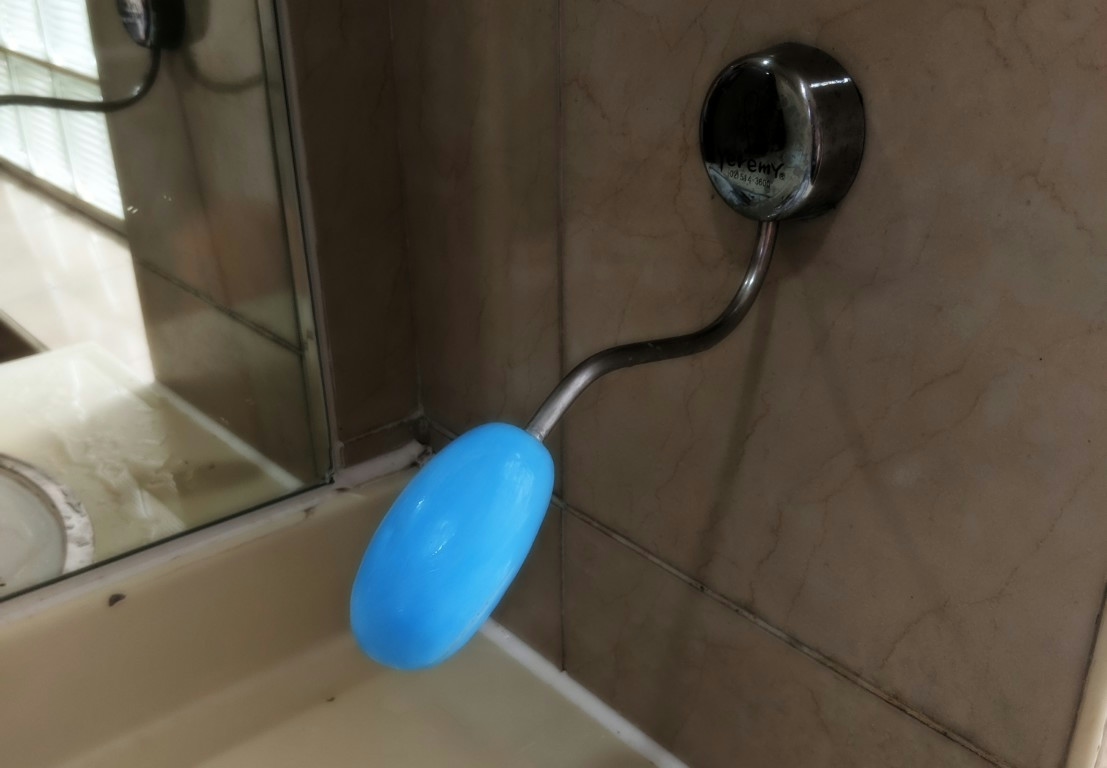
Before diving into any of the pools, however, thorough cleansing is essential. The bathing area includes Korean-style shower stations, which are small stools for seated washing and a shared soap column, one of the more unusual sights, reminiscent in shape of an Indian lingam.
If you’d like a massage, there are professionals available for an additional fee. They also make sure that, apart from themselves, everyone in the bathing area remains nude.
And an important, maybe even too obvious, note: mobile phones are strictly forbidden downstairs. This rule is enforced seriously due to past issues in Korea involving unauthorized photography in public bathhouses. Even if you’re waiting for an important message or email, leave your phone in your locker. If needed, you can check it upstairs, just be sure to keep it on silent out of respect for others.


Jimjilbangs are very reasonably priced, and most, if not all, are open 24 hours a day, seven days a week. For many of my Korean friends, these places serve as ideal spots to socialize or to continue a night out without returning home intoxicated, especially since it’s still common in Korea for adults to live with their parents.
With food and entertainment on-site, including restaurants, karaoke rooms, and gaming areas, the options are nearly endless. It’s not unusual for people to spend an entire day, or even the night, at a jimjilbang. Sleeping areas are widely available, and while there may be a small additional charge for overnight stays, it remains far cheaper, cleaner, and safer than spending the night at a train station. For backpackers, it’s an ideal option.
Interestingly, all of the hotels I stayed in during my trip were Western-style, so even taking a short nap on a tatami mat in the traditional Korean way was a fascinating experience in itself.


The next time I visit South Korea, I definitely plan to dive deeper into the jimjilbang experience. It’s more than just a cultural tradition, it’s genuinely enjoyable, especially when shared with friends. And not just on rainy days!
P.S. Like many businesses affected by the pandemic, Siloam Sauna appears to have closed permanently, though some sources suggest it may have relocated. Living in London, I haven’t been able to confirm its current status. Still, jimjilbangs remain a vibrant part of Korean culture, and I’ve decided to keep this post as a snapshot of the experience. Just keep in mind that each venue has its own character, not all will offer the same range of amenities that Siloam once did.
For easy navigation through the entire story, each post includes the links listed below.
- our big fat Korean wedding – part 1
- our big fat Korean wedding – part 2
- our big fat Korean wedding – part 3
- our big fat Korean wedding – part 4